What Your Child's Toy Shelf Is Actually Telling You About How They're Growing
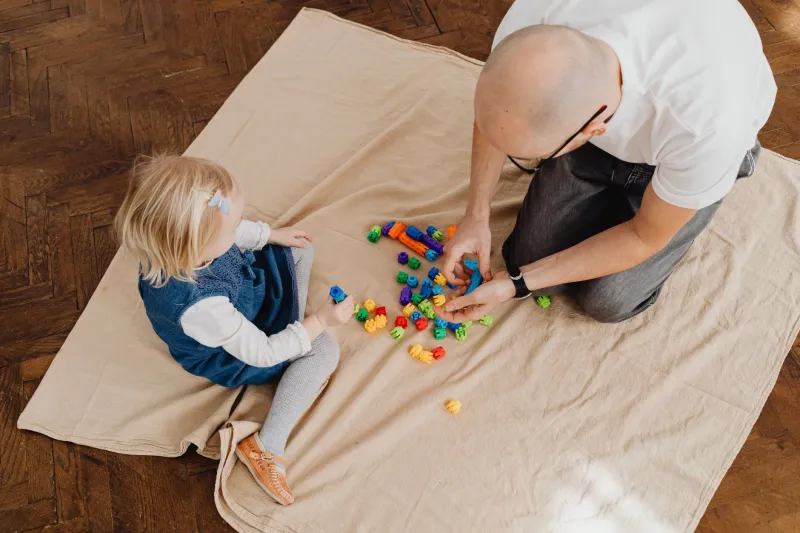
Your kid has strong opinions about their toys. They always have. They'll ignore an expensive set and spend three days obsessed with a cardboard box. They'll drag the same stuffed rabbit everywhere for a year, then drop it cold. They'll build the same Lego structure over and over until they've got it exactly right.
None of this is random. Children's play preferences are, in a very real sense, a window into their developmental world — what they're working on, what they need, and sometimes, what's quietly challenging them. Learning to read those signals doesn't require a psychology degree. It just requires paying attention.
The Basics: Why Kids Choose What They Choose
Play is a child's primary mode of learning and self-regulation. From infancy through adolescence, the toys and games children gravitate toward tend to reflect the cognitive and emotional work they're doing at any given stage. Jean Piaget's foundational research on child development showed that play isn't frivolous — it's how children construct their understanding of the world.
Developmental psychologists describe play in stages that roughly map to age: sensorimotor play in infancy, symbolic and pretend play in the toddler and preschool years, rule-based play in middle childhood. But within those broad stages, individual children show strong preferences that reveal a lot about their specific developmental priorities.
The trick for parents is learning to observe without interfering — to notice what a child chooses freely, when no one is guiding them.
Reading the Signals by Age
Babies and Toddlers (0–3): It's All About the Senses
Very young children are wired to explore through their bodies. A baby who reaches repeatedly for a specific texture — the soft edge of a blanket, the smooth surface of a wooden rattle — is building their sensory map of the world. This is healthy and important.
Toddlers who are drawn to stacking, nesting, and sorting toys are flexing their emerging understanding of spatial relationships and cause-and-effect. A two-year-old who can spend twenty minutes moving objects from one container to another isn't being repetitive for no reason — they're running experiments.
If a toddler consistently avoids certain textures, sounds, or movement-based toys, that's worth noting. It can signal sensory sensitivities that, if identified early, can be gently supported through gradual exposure and play.
Preschoolers (3–5): The World of Pretend
Pretend play is where things get really interesting — and really revealing. The scenarios a four-year-old creates in play aren't random. They're often direct reflections of what that child is trying to understand or emotionally process.
A child who repeatedly plays "doctor" after a scary medical appointment is working through anxiety in the safest way they know how. A child who sets up elaborate "family" scenes with dolls or figurines is exploring social roles and relationships. A child who creates disaster scenarios — earthquakes, fires, floods — and then "rescues" everyone may be processing a sense of powerlessness and practicing agency.
Pay attention to the themes in your preschooler's pretend play, not just the toys. Recurring themes — especially ones involving loss, danger, or conflict — can signal emotional needs that are worth gently exploring in conversation.
Children this age who rarely engage in pretend play, preferring only physical or mechanical toys, aren't necessarily delayed — but it's worth offering more opportunities for imaginative play and seeing how they respond.
Early Elementary (6–8): Rules, Systems, and Fairness
Around kindergarten and first grade, children develop a strong interest in rules. Board games, card games, and structured sports become appealing because they offer a framework — a set of shared expectations. This is developmentally significant: kids this age are working out concepts of fairness, turn-taking, and social reciprocity.
A child who loves strategy games like checkers or simple card games is often developing logical thinking and the ability to anticipate consequences. A child who is drawn to building systems — train sets with complex layouts, construction toys with specific engineering goals — is often highly systematic in their thinking, which can be a real strength in math and science.
Watch for rigidity. A child who melts down when game rules aren't followed exactly, or who can't adapt when a building project doesn't go as planned, may need gentle coaching in flexibility and frustration tolerance — skills that play can directly build.
Tweens (9–12): Identity, Mastery, and Belonging
Older kids' toy and game preferences shift toward mastery and peer connection. The child who was happy playing alone at seven now cares deeply about what their friends are into. Shared games — trading card games, cooperative video games, team sports — become socially important.
A preteen who is intensely focused on a single area of interest (trains, astronomy, a particular sport, a specific craft) is often in the process of building a sense of identity and competence. This kind of deep interest, sometimes called a "flow state" hobby, is genuinely healthy — even when it looks obsessive from the outside. Feeding that interest with quality materials and resources is one of the best things a parent can do.
Conversely, a child this age who seems to have no strong interests and drifts passively between activities may be struggling with motivation or confidence. It's worth exploring whether there's something — a fear of failure, social anxiety, or simply unexposure — getting in the way.
When Play Patterns Flag Something Worth Attention
Most variations in toy preference are completely normal expressions of individual temperament. But a few patterns are worth flagging:
- Play that is exclusively solitary past age five, with no interest in playing alongside or with other children, can sometimes signal social development challenges worth exploring.
- Regressive play — a seven-year-old suddenly returning to toddler toys after a period of stress — is often a sign of emotional overwhelm. It usually resolves on its own, but it's a cue to check in.
- Inability to engage in any open-ended play (always needing instructions, unable to self-direct) can point to anxiety or difficulty with ambiguity.
- Aggressive themes dominating pretend play over a long period, especially after exposure to conflict or trauma, are worth discussing with a pediatrician or child therapist.
What You Can Do With This Information
Observing your child's play doesn't mean hovering or analyzing every move. It means creating space for free play and paying relaxed attention to what emerges.
If you notice your child gravitating toward certain kinds of play, lean in. A child obsessed with sorting and categorizing might light up with a more complex organizational game. A child who loves storytelling in pretend play might be ready for a simple puppet theater or their first journal.
And if something in their play patterns gives you pause, trust your instincts. Parents are often the first to notice when something's off — not because they have clinical expertise, but because they know their kid. Bring those observations to your pediatrician or a child development specialist. Detailed notes about what you've seen in play are genuinely useful clinical information.
At Zabawka Shop, we think a lot about why toys matter — not just as objects, but as tools for growth. When you understand what your child is working on developmentally, choosing the right toy stops being guesswork. It becomes a conversation.