Move to Focus: The Truth About Fidget Toys and Your Kid's Concentration
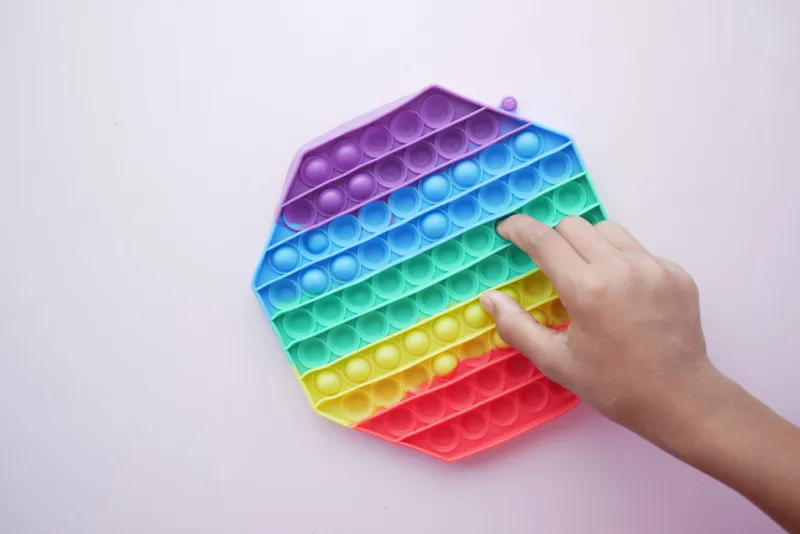
Walk into any elementary school hallway in America and you'll spot them: kids squeezing stress balls, bouncing on inflatable seat cushions, or quietly clicking a fidget cube under their desk. Parents and teachers alike have strong opinions about these tools — some swear by them, others have banned them outright. The truth, as usual, lives somewhere in the middle.
So what's actually going on when a child fidgets? And how do you know whether that spinner is sharpening your kid's brain or just driving their teacher up the wall?
Why Kids Fidget in the First Place
Fidgeting isn't a bad habit. For a lot of children, it's a coping mechanism — a way the body regulates the nervous system when the brain is working hard. Research from the University of California, Davis found that hyperactive movement in kids with ADHD was actually linked to better performance on cognitive tasks. Their bodies were essentially helping their brains stay online.
But here's the thing: not every kid who fidgets has ADHD, and not every kid with ADHD needs the same kind of sensory input. The nervous system is personal. Some children are sensory seekers — they crave movement, texture, and pressure to feel regulated. Others are sensory avoiders, easily overwhelmed by too much stimulation. Handing both types the same fidget tool and expecting the same result is a little like giving everyone the same prescription glasses.
Occupational therapists call the sweet spot "just-right challenge" — enough sensory input to keep the brain engaged, but not so much that it becomes the main event.
The Tools That Actually Deliver
Not all fidget toys are created equal. Some genuinely support focus; others are basically tiny entertainment systems disguised as learning aids. Here's how to tell the difference.
Movement-based seating — think wobble stools, balance boards, or inflatable cushions — tends to show solid results for kids who struggle to sit still during homework or classroom instruction. The subtle, continuous movement engages the vestibular system (the brain's balance center) without demanding visual attention. The child can keep their eyes on their work while their body gets what it needs. For kids in grades K through 5, this kind of low-key proprioceptive input is often a game-changer.
Tactile tools like textured rings, smooth worry stones, or fidget cubes with buttons and dials work well for kids who need sensory input through their hands. The key is that these should be boring to look at. A plain silicone ring that a child can roll between their fingers during a read-aloud? Great. A glittery spinner that catches light and draws every eye in the room? Not so much.
Chewable jewelry — silicone pendants or bracelets designed for oral sensory input — is often underappreciated by parents but beloved by occupational therapists. For kids who chew on pencils, collars, or sleeves, a safe chewable alternative can genuinely reduce anxiety and improve focus. Just make sure you're buying food-grade silicone from a reputable source.
When Fidget Toys Backfire
Here's the honest part: a lot of what gets marketed as "focus tools" is just... toys. The fidget spinner craze of 2017 is the obvious example. Visually stimulating, mechanically satisfying, and almost entirely useless for concentration — they were so disruptive that hundreds of schools banned them within months of their debut.
The red flag is visual complexity. If a child (or anyone nearby) is watching the toy instead of the task, it's a distraction, full stop. The same goes for noisy gadgets — clicking, popping, or tapping tools that create sound can pull other kids off track even if the fidgeter themselves is fine.
Age matters too. Younger children, roughly under five, often don't have the cognitive bandwidth to manage a fidget tool and a learning task simultaneously. For this age group, movement breaks — a quick lap around the yard, some jumping jacks, five minutes of free dance — tend to work better than in-the-moment fidget tools. Let them move completely, then bring them back to the activity.
How to Figure Out What Your Child Actually Needs
Before buying anything, spend a few days observing your kid. What do they do when they're trying to concentrate? Do they rock in their chair? Hum? Tap their feet? Chew on things? These behaviors are clues about what kind of sensory input their nervous system is craving.
- Rockers and bouncers often respond well to movement seating or a mini trampoline for homework breaks.
- Tappers and hand-movers usually do well with tactile desk tools.
- Chewers and mouth-fidgeters benefit from chewable jewelry or crunchy snacks during study time.
- Kids who pace or need big movement may not be fidget-toy candidates at all — they might need scheduled movement breaks built into their routine instead.
If your child has an IEP or works with an occupational therapist, loop them in before making purchases. A good OT can assess your child's sensory profile and make targeted recommendations that save you from buying a drawer full of tools that don't fit.
A Note for the Classroom
If you're hoping your child can use a fidget tool at school, talk to the teacher first. Many educators are open to it when parents frame it as a sensory support rather than a toy, and when the tool itself is genuinely unobtrusive. Send it in a plain bag, explain what it's for, and offer to problem-solve if it becomes a distraction.
The goal isn't to give kids a pass on paying attention — it's to remove the sensory static that's getting in the way of them doing exactly that. When the right tool meets the right kid, the difference can be remarkable. When it doesn't, you're just adding noise to an already busy classroom.
At Zabawka Shop, we think a lot about what play actually does — not just what it looks like. The best sensory tools are the ones that disappear into the background, quietly doing their job while your kid gets on with the business of learning. That's the standard worth shopping for.