Touch, Sound, Sight: The Science Behind Toys That Make Kids Both Smarter and Calmer
Picture this: your four-year-old is squeezed into the corner of the couch, iPad in hand, completely zoned out. You call their name twice. Nothing. The third time, they snap back with glazed eyes and a short fuse. Sound familiar? If you're a parent in 2024, it probably does.
Here's the thing — that glazed-over look isn't laziness or bad behavior. It's actually your child's brain signaling that it's been fed a very narrow diet of stimulation. Screens are loud and bright, but they're missing something crucial. And that missing ingredient is exactly what multisensory toys are built to deliver.
What's Actually Happening in a Child's Brain During Play
Neuroscientists have spent decades studying how early sensory experiences shape brain architecture. The short version? When a child engages multiple senses simultaneously — touching a rough texture while hearing a sound and tracking movement with their eyes — different regions of the brain fire at the same time and begin forming connections with each other. These cross-regional connections are the foundation of higher-order thinking: problem-solving, creativity, emotional regulation, and language.
Dr. Lise Eliot, a neuroscientist and author of What's Going On In There?, has written extensively about how sensory-rich environments during early childhood literally shape the physical structure of the brain. The more varied and layered the sensory input, the denser and more flexible the neural network becomes.
Single-sense toys — think a basic light-up button that just flashes — activate one region and then go quiet. Multisensory toys keep multiple brain regions engaged at once, which is why a child can play with a good wooden rattle or a textured puzzle for far longer than you'd expect.
The Sensory Combinations That Hit Different by Age
Not every sensory combo works equally well at every developmental stage. Here's a rough breakdown of what tends to land best:
Newborns to 6 months: Contrast + Gentle Sound + Soft Touch At this stage, vision is still developing. High-contrast patterns (black and white or bold primary colors) paired with soft crinkle sounds and varied textures — think a soft fabric rattle with a crinkle interior — give the brain just enough complexity without overwhelming it. Too many inputs at once can cause a newborn to shut down and look away, which is actually their self-regulation kicking in.
6 to 18 months: Cause-and-Effect + Tactile Variety + Sound Feedback This is the golden age of "I did that." Babies at this stage are obsessed with understanding consequences. Toys that make a satisfying sound when squeezed, change texture as they're manipulated, or produce a visual response to touch are incredibly powerful here. Wooden toys with bells inside, fabric books with different textures on each page, or simple shape sorters with auditory feedback all hit this sweet spot.
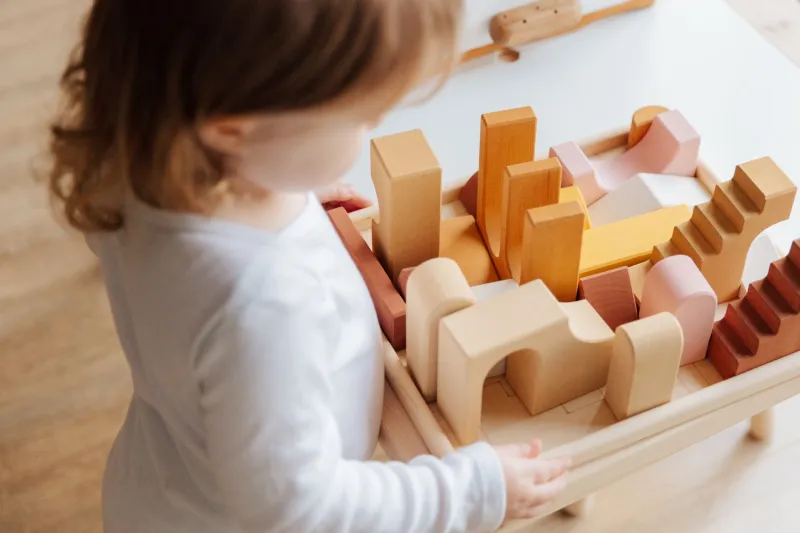
18 months to 4 years: Movement + Social Sound + Open-Ended Texture Toddlers want to move, and they want to narrate everything they're doing. Toys that invite whole-body interaction — rolling, stacking, pouring — while offering rich tactile feedback (sand, water, clay, wood grain) and opportunities for storytelling work exceptionally well. Think kinetic sand, water tables, or wooden block sets with varied shapes and finishes.
4 to 8 years: Strategic Input + Sensory Reward + Collaborative Sound Older kids benefit from sensory experiences that are tied to decision-making. Board games with tactile pieces, arts and crafts kits with mixed media, or building sets that require spatial reasoning alongside physical manipulation keep both the logical and creative brain regions humming.
What Real Parents Are Noticing
Ask parents who've made a deliberate shift toward multisensory toys, and the feedback is surprisingly consistent.
Jessica, a mom of three from outside Chicago, swapped out most of her youngest daughter's electronic toys for wooden and fabric alternatives about a year ago. "The meltdowns dropped significantly," she says. "I don't know if it's the toys specifically or just less screen time, but she plays longer, she transitions better, and she sleeps better. I'll take it."
Marcus, a dad from Austin whose son was flagged for sensory processing differences at age three, found that his occupational therapist's recommendations aligned almost perfectly with multisensory toy principles. "She told us to look for toys that gave him 'heavy work' — stuff he could push, pull, squeeze — alongside sound and visual feedback. It made a huge difference in how long he could stay regulated during the day."
And then there's Nina, a preschool teacher in New Jersey who started bringing more tactile, multi-input materials into her classroom two years ago. "Kids who used to drift off or act out during free play started actually engaging. The ones who struggled most with sitting still did best with the most sensory-rich options. It's like their bodies needed something to anchor them."
Why Overstimulated Kids Actually Need More Sensory Input — Just the Right Kind
This one surprises a lot of parents. Intuitively, you might think that a kid who's already overwhelmed needs less stimulation. But sensory science tells a more nuanced story.
Screen-based stimulation is high-intensity but low-variety. It floods the visual and auditory cortex while leaving the tactile, proprioceptive, and vestibular systems almost completely idle. That imbalance is part of what creates that wired-but-exhausted state so many kids live in after long screen sessions.
Multisensory physical play actually helps recalibrate the nervous system by distributing activation across more brain regions — including the ones that regulate calm and focus. It's less like adding fuel to a fire and more like spreading warmth more evenly.
This is why sensory play is a cornerstone of occupational therapy for kids with anxiety, ADHD, and sensory processing challenges. It's not fringe science — it's standard clinical practice.
Choosing Toys That Do More
You don't need to overhaul your entire playroom. A few well-chosen additions can make a meaningful difference. When you're evaluating a toy, ask yourself:
- Does it engage more than one sense at the same time?
- Does it invite open-ended exploration rather than a single correct action?
- Does it offer physical feedback — resistance, texture, weight — that screens can't replicate?
- Will it grow with your child, or does it max out in a single play session?
At Zabawka Shop, we think about these questions constantly when curating what we carry. The best toys aren't necessarily the flashiest or the most expensive — they're the ones that give a child's brain something real to work with.
Because when kids get that sensory sweet spot — when the touch, the sound, and the sight all come together in a way that feels just right — you'll know. They'll stop asking for the iPad. They'll stop needing you to entertain them. And for a little while, the whole house gets a little quieter in the best possible way.