Together We Win: Why Cooperative Games Are the Secret Weapon for Raising Emotionally Smart Kids
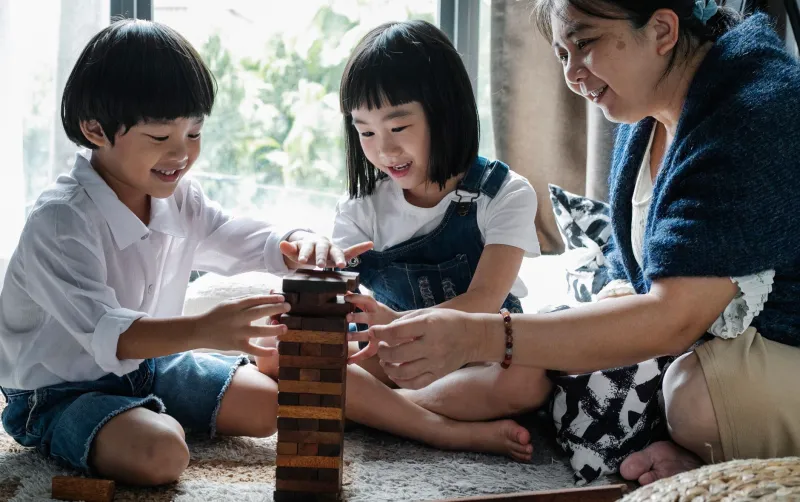
Picture a typical Friday night game night. Someone flips the board, someone else bursts into tears, and the youngest player swears they're never playing again. Sound familiar? For generations, competitive board games have been a staple of American family culture — and for good reason. A little healthy competition never hurt anyone. But a quieter revolution has been unfolding in playrooms across the country, and it's changing the way kids interact with each other in ways that go way beyond who rolls the highest number.
Cooperative games — where players work together toward a shared goal rather than against each other — have moved from niche toy store shelves to pediatric waiting rooms and school counselor recommendations. And the psychology behind why they work is genuinely fascinating.
What Makes Cooperative Games Different
At the most basic level, cooperative games flip the script. Instead of one winner and a table full of losers, everyone either succeeds together or fails together. That single design change creates a completely different emotional environment at the table.
In a competitive game, the incentive structure rewards keeping information to yourself, outmaneuvering others, and prioritizing your own outcome. In a cooperative game, the incentive structure rewards sharing information, listening to other players' ideas, and making decisions that benefit the whole group — even when it's not the flashiest personal move.
For kids, that difference is enormous. They're not just playing a game; they're practicing a set of social behaviors that researchers increasingly link to long-term emotional intelligence.
The Psychology Behind Playing Together
Dr. Stuart Brown, a leading researcher in play science, has long argued that the type of play matters as much as play itself. Cooperative play specifically activates what developmental psychologists call "prosocial behavior" — actions that benefit others without a direct personal reward. And it turns out that practicing prosocial behavior, even in a game setting, actually reinforces those neural pathways in developing brains.
When a seven-year-old chooses to share a key resource card with a teammate who needs it more, they're exercising empathy in real time. When a group of kids has to agree on a strategy before the timer runs out, they're navigating the messy, frustrating, deeply human art of negotiation. These aren't abstract lessons — they're live rehearsals for the conversations kids will need to have on the playground, in the classroom, and eventually in their adult relationships and workplaces.
Child psychologists have increasingly started recommending cooperative games as therapeutic tools, particularly for kids who struggle with emotional regulation, sore-loser tendencies, or social anxiety. The reason is simple: cooperative games lower the stakes of failure while keeping the emotional engagement high. Losing together feels fundamentally different than losing alone.
Specific Mechanics That Do the Heavy Lifting
Not all cooperative games are created equal, and it's worth understanding which game mechanics are doing the most developmental work.
Role specialization — where each player has a unique ability the group depends on — is one of the most powerful tools. When a child realizes that their specific contribution is what allows the team to move forward, it builds genuine confidence and a sense of belonging. Games that use this mechanic teach kids that different strengths are assets, not threats.
Group decision-making under pressure is another mechanic that shows up in many popular cooperative titles. When the group has limited time to agree on a move, kids learn to advocate for their ideas clearly, hear out alternatives quickly, and sometimes defer to someone else's judgment — an underrated skill that most adults are still figuring out.
Shared resource management teaches kids the concept of collective responsibility. When everyone draws from the same pool of options, children start naturally thinking about how their choices affect the people around them. That's not a small thing. That's the foundation of community thinking.
What the Playgroup Favorites Are Getting Right
American families have embraced titles like Forbidden Island, Hoot Owl Hoot!, and Pandemic (yes, even kids' versions exist) precisely because these games don't just entertain — they generate conversation. Parents report that cooperative games create more natural back-and-forth dialogue during play than competitive ones, where kids often go quiet and strategic.
For younger children, simpler cooperative games with bright visuals and easy mechanics serve as an on-ramp. The goal isn't complexity — it's creating repeated low-pressure opportunities to practice saying things like "What do you think we should do?" or "I think if we do this, it might help you too." Those phrases, practiced in a playful setting, start to become second nature.
The Competitive Game Isn't the Enemy
Here's where we pump the brakes a little, because nuance matters. Competitive games aren't the villain in this story. Learning to lose gracefully, manage disappointment, and celebrate someone else's success are genuinely valuable skills — and competitive games do teach them, when the emotional environment around the game is healthy.
The real insight isn't that cooperative games should replace competitive ones. It's that most American kids get a whole lot of competitive game experience and comparatively little cooperative game experience. The balance is off. Introducing more collaborative play into the rotation gives kids a fuller emotional toolkit, not a softer one.
Making the Switch at Home
If you're curious about bringing more cooperative play into your family's routine, the entry point is easier than you might think. Start with age-appropriate games that have a clear, concrete shared goal — "save the forest," "get everyone home before dark," "collect all the ingredients before the soup gets cold." Tangible goals help younger kids stay emotionally invested in the group outcome.
Pay attention to what happens after the game, win or lose. Cooperative games tend to generate more natural debriefing conversations — kids want to talk about what went wrong or what brilliant move saved the day. That post-game conversation is where a lot of the real social learning happens.
And don't underestimate the power of playing alongside your kids rather than against them. When adults model collaborative problem-solving — genuinely asking for a child's input, deferring to their ideas, celebrating a group win — kids internalize that cooperation is something capable, respected people do.
The Bigger Picture
At Zabawka Shop, we think a lot about what toys and games are actually doing for kids beneath the surface fun. Cooperative games, it turns out, are doing quite a lot. They're building the kind of social intelligence that no worksheet or lesson plan can fully replicate — the kind that gets practiced, stumbled through, and gradually mastered at a table surrounded by people who are all rooting for the same outcome.
In a world that often feels relentlessly competitive, teaching kids early that winning together is its own kind of victory might be one of the most quietly radical things a family can do on a Friday night.