Empty Afternoon, Full Potential: What Science Says About Letting Kids Get Bored
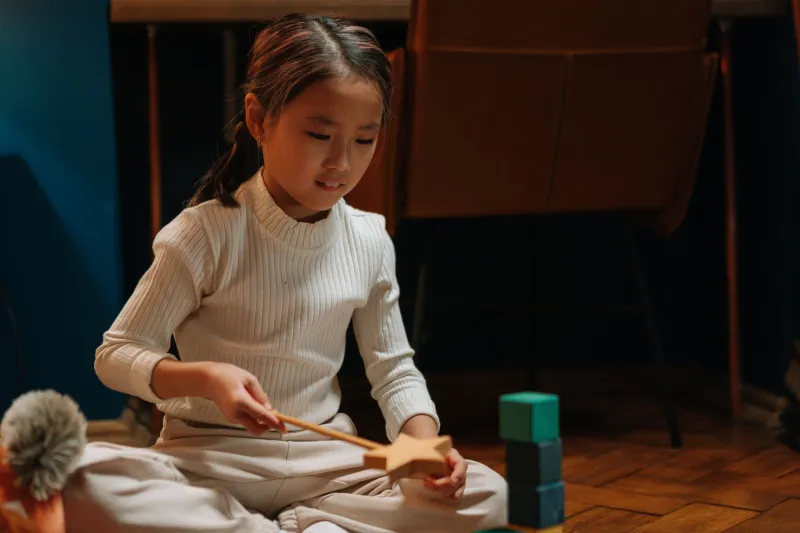
It's a Saturday afternoon. The soccer game got rained out, the playdate fell through, and your kid is standing in the middle of the living room with that look — you know the one. Arms loose at their sides, a low-grade groan building in their chest. "I'm bored. There's nothing to do."
Every parent's instinct is to fix it. Pull up a show, hand over a tablet, suggest an activity, sign them up for literally anything. But what if the best thing you could do in that moment is... nothing? What if boredom isn't a problem to solve, but a doorway your kid is about to walk through on their own?
Spoiler: the science is pretty firmly on the side of the boring afternoon.
What Actually Happens in a Bored Brain
When kids have nothing scheduled, nothing demanded of them, and no screen filling the silence, their brains don't just idle. Neuroscientists have found that the brain's "default mode network" — the system that activates during rest and mind-wandering — is actually doing some of its most important work during those slow, directionless stretches.
This network is linked to imagination, empathy, self-reflection, and the ability to mentally simulate future scenarios. In plain terms: it's where daydreaming lives. And daydreaming, it turns out, is not the enemy of learning. It's a core ingredient.
Dr. Sandi Mann, a psychologist at the University of Central Lancashire, has studied boredom extensively and found that people who are allowed to be bored before creative tasks consistently outperform those who go straight into the work. The discomfort of having nothing to do pushes the brain to generate something — and that generative impulse is exactly what we call creativity.
For kids, that might look like deciding the couch cushions are a raft in a shark-infested ocean. Or that the backyard needs a headquarters. Or that two cardboard boxes and some tape could become a robot costume. None of that happens when the afternoon is already spoken for.
The Overscheduled Kid Problem
American parents are, on the whole, incredibly devoted. And that devotion often shows up as a calendar packed with enrichment: swim lessons, coding camp, art class, travel sports leagues, tutoring. Each individual activity makes sense. Collectively, they can crowd out something essential.
Researchers at the University of Colorado Boulder found that kids with more unstructured time in their schedules demonstrated better self-directed executive function — the ability to set their own goals, manage their attention, and regulate their behavior. Kids whose time was largely adult-directed showed lower scores in these same areas, even when their structured activities were high-quality.
Executive function, by the way, is one of the strongest predictors of long-term success — stronger, some researchers argue, than IQ. It's the engine behind focus, resilience, and the ability to solve problems that don't come with instructions.
When every hour is filled, kids never practice steering themselves. They get very good at following a schedule. They don't get as much practice deciding what to do next.
Why 'I'm Bored' Is Actually the Beginning
Here's what the bored moment really is: it's the split second before a child becomes self-reliant. The discomfort of having no external input forces them to look inward. What do I want to do? What sounds interesting to me? How do I make something happen on my own?
Those questions are small, but they're training wheels for bigger ones your kid will face later: What do I want to study? What kind of work feels meaningful? How do I solve a problem nobody has handed me a solution for?
Boredom also builds frustration tolerance. Sitting with discomfort — even mild, low-stakes discomfort like a quiet afternoon — teaches kids that they can handle not being entertained. That's a skill that translates directly into sticking with hard tasks, trying again after failure, and not needing constant external validation.
How to Actually Let This Happen (Without Going Nuts)
Embracing boredom doesn't mean clearing the calendar forever or pretending screens don't exist. It means being intentional about carving out pockets of unstructured time and resisting the urge to fill them.
A few practical approaches that work for a lot of families:
Set a loose "nothing scheduled" window each week. Even two or three hours on a weekend afternoon, with no plans and no screens, gives kids the chance to find their own rhythm. The first few times might involve a lot of complaining. That's normal. Stick with it.
Resist the rescue. When your kid says they're bored, try responding with something like "I bet you'll figure something out" instead of jumping in with suggestions. It signals that you believe in their ability to entertain themselves — and that belief matters.
Curate the environment, not the activity. You don't have to do nothing. You can set the stage. A basket of open-ended toys — wooden blocks, loose parts, art supplies, simple building sets — gives kids raw material without telling them what to make. The best toys for unstructured time are the ones that don't have a single right answer. A toy that does one thing teaches one thing. A toy that can become anything teaches everything.
Go outside and step back. Nature is one of the greatest boredom-busters that doesn't feel like busting boredom. A backyard, a park, even a patch of dirt has more creative potential than most people give it credit for. Let them dig, build, wander. Resist narrating.
The Toy Angle Nobody Talks About
Not all toys are created equal when it comes to supporting independent play. Highly prescriptive toys — the ones with one mode, one outcome, one way to win — don't leave much room for imagination. They're engaging, sure, but they're doing most of the creative work for your kid.
Open-ended toys flip that equation. Blocks, figurines without scripts, art materials, building sets with no specific goal — these are tools, not experiences. They require the child to bring the idea. And that requirement is exactly what makes them so valuable during unstructured time.
At Zabawka Shop, a lot of what we love about traditional toy design is that it tends to be simple on purpose. A well-made wooden toy doesn't beep, light up, or tell your kid what to do next. It just sits there, full of possibility, waiting for a kid with a free afternoon and a bored brain to decide what it's going to become today.
That's not a design flaw. That's the whole point.
The Long Game
Raising a kid who can sit with boredom, generate their own ideas, and follow through on them isn't a small thing. It's one of the most future-proof skills you can help them build — especially in a world that's getting louder and more stimulating by the year.
So the next time your kid drags into the room on a slow Sunday and announces there's absolutely nothing to do, take a breath. Smile, maybe. And let them figure it out.
The breakthrough is closer than it looks.