Playing in Two Languages: How Polish Toys Are Sneaking Vocabulary Into American Kids' Playtime
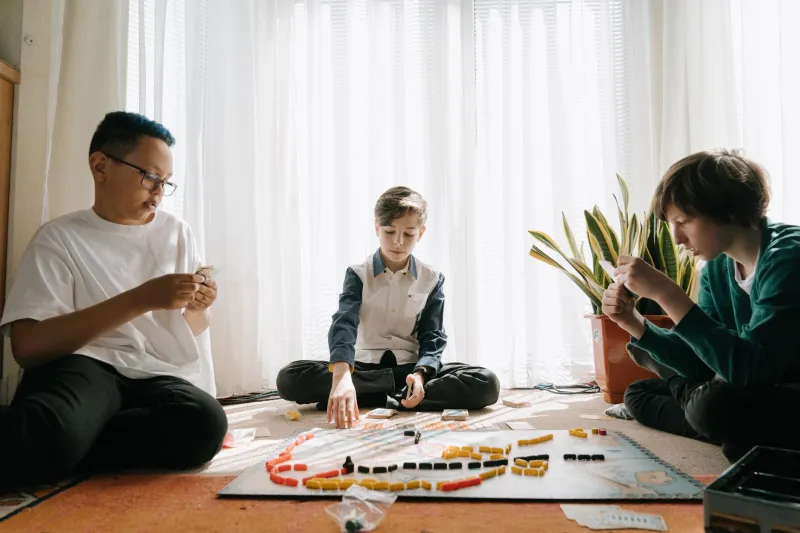
Picture a Saturday afternoon in a home in suburban Chicago. Two kids are sprawled across the living room floor, a colorful game board between them, their mom calling out words in a language that isn't English. Nobody's rolling their eyes. Nobody's begging to go back to their tablet. They're into it.
This is what language learning looks like when it doesn't feel like learning at all.
Across the US, a quiet trend is picking up steam among multilingual households, heritage families, and even curious parents with zero Polish background: traditional board games and toys from Poland are becoming unexpected language-learning tools. And the results, according to both parents and child development experts, are pretty remarkable.
Why Play-Based Language Exposure Actually Works
Here's the thing about formal language lessons for young kids — they can work, but they often feel like work. Repetition drills, vocabulary quizzes, and rigid grammar rules don't exactly spark joy in a seven-year-old. Play, on the other hand, is the native language of childhood.
Research in developmental psychology has long supported the idea that children absorb language most effectively when it's tied to meaningful, emotionally engaging experiences. When a child hears a new word during a game — when there's excitement, laughter, or even mild frustration involved — that word tends to stick. The brain is primed to learn in those moments in a way it simply isn't during rote memorization.
Polish games, many of which involve rich storytelling elements, category-based word play, or collaborative problem-solving, create exactly those kinds of moments. They're not designed as language tools, which is arguably part of why they work so well as them.
The Games That Are Making a Real Difference
So which games are families actually reaching for? A few stand out.
Word and category games have been a staple in Polish households for generations. Games that challenge players to shout out words belonging to a specific category — animals, foods, things you'd find at a market — naturally build vocabulary in any language. When a bilingual parent plays alongside their child and offers words in Polish, the game becomes a low-pressure vocabulary lesson without anyone calling it that.
Storytelling card games are another big hit. These games use illustrated cards to prompt players to build narratives together. Because the images are universal, kids can participate regardless of their language level, and parents can narrate or add details in Polish, English, or both. The storytelling context gives new words immediate meaning, which is gold for retention.
Matching and memory games with illustrated Polish labels work especially well for younger children. When a toddler flips over a card showing a duck and hears kaczka repeated a dozen times across a single game session, that word becomes part of their world in a way no app can quite replicate.
What Multilingual Families Are Actually Saying
We talked to several families around the country who've been incorporating Polish games into their routines, and the common thread wasn't heritage — it was intentionality.
One mom in Minneapolis, whose family is a mix of Polish and American backgrounds, said she started buying games from Polish toy shops online because she wanted her kids to associate the language with fun rather than obligation. "We tried the structured approach and it felt like homework," she told us. "But when we started playing games, suddenly my daughter was asking me how to say things in Polish on her own. That never happened before."
A dad in New Jersey with no Polish heritage at all started exploring European board games after reading about the cognitive benefits of bilingualism. "We're not Polish, but we figured, why not expose our son to something different? He loves the games, and now he knows probably thirty Polish words just from playing. He thinks it's hilarious to know words his friends don't."
That last part matters more than it might seem. When language learning becomes a source of pride or playful novelty rather than pressure, kids lean into it.
The Cognitive Upside Goes Beyond Vocabulary
Language exposure through play isn't just about picking up new words. Research suggests that children regularly exposed to more than one language — even passively — develop stronger executive function skills. That includes things like attention switching, mental flexibility, and the ability to focus despite distractions. These are skills that show up in academic performance, social interactions, and problem-solving across the board.
Board games themselves already support many of these same cognitive functions. Combine the two, and you've got a genuinely powerful developmental tool hiding inside what looks like a totally ordinary game night.
Child development specialists often emphasize that the goal of early language exposure isn't fluency — it's familiarity and comfort. A child who grows up hearing a second language in a relaxed, joyful context is far more likely to pursue it later than one who associates it with pressure or failure.
How to Build Your Own Bilingual Toy Box
You don't need to be a Polish speaker to get started, and you definitely don't need a perfectly curated bilingual curriculum. Here are a few simple ways to ease into it:
Start with visuals. Games that rely heavily on pictures rather than text are the most accessible entry point for families new to Polish. Look for matching games, illustrated card sets, and board games with minimal reading requirements.
Let the game lead. Don't force the language angle. Play the game the normal way first, and introduce Polish words organically — name what's on a card, describe what's happening in the story, count spaces in Polish. Keep it light.
Repeat through play, not drills. The beauty of games is that you play them over and over. Repetition happens naturally, which means vocabulary reinforcement happens naturally too.
Mix it into regular game night. You don't need a dedicated "language learning session." Just swap in a Polish game every few weeks alongside your usual favorites. Consistency over time is what builds familiarity.
The Toy Box as a Window to the World
At Zabawka Shop, we've always believed that the best toys do more than entertain — they open doors. A game from Poland sitting on an American family's shelf isn't just a fun way to spend a rainy afternoon. It's a small invitation to see the world a little differently, to hear sounds that feel new, and to realize that play has no language barrier.
Whether you're a heritage family keeping a connection alive, a multilingual household looking for low-pressure tools, or just a curious parent who loves the idea of your kid knowing how to say żyrafa (giraffe, by the way) — the bilingual toy box is worth exploring.
The vocabulary will follow. The fun comes first.