Ditch the Charger: Why Old-School Toys Are Winning the Battle for Kids' Attention This Summer
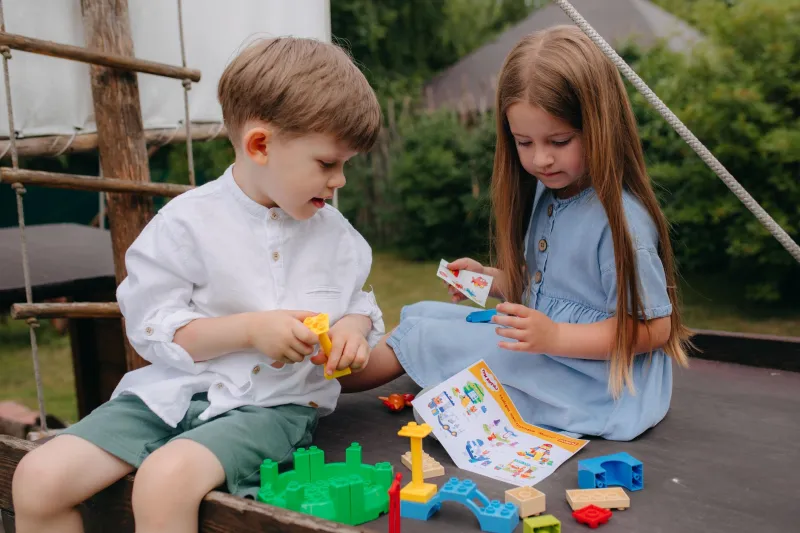
It's July. The kids are home. And somewhere between the third Netflix episode and the second hour of tablet time, a lot of parents are quietly asking themselves: Is this really how summer is supposed to go?
You're not alone in that feeling. Across the country, families are starting to push back on screen-saturated summers — and a growing number of them are turning to something surprisingly low-tech: open-ended, battery-free toys. No charging cables. No monthly subscriptions. No app updates at the worst possible moment.
And here's the twist — kids are actually playing with them longer.
The Psychology Behind the Longer Play Session
It sounds counterintuitive, right? A flashy tablet with thousands of games should win against a set of wooden blocks every time. But child development researchers have been making a compelling case for the opposite for years.
The key concept is something called open-ended play — play that doesn't have a built-in ending, a defined goal, or a screen telling the child what to do next. When a toy does everything for a kid, the child's brain essentially goes into passenger mode. When a toy does nothing by itself, the child's imagination has to drive.
Dr. Sandra Leanne Bosacki, a developmental psychologist who studies children's imaginative play, has described this phenomenon as the brain "filling in the gaps" — and that filling-in process is where a huge amount of cognitive work happens. Problem-solving, narrative building, emotional processing, spatial reasoning. It all kicks in when a child is handed something simple and told, essentially, "figure it out."
Open-ended toys — think building sets, art supplies, dress-up clothes, sand and water play kits, or classic figurines — create what researchers sometimes call a "low floor, high ceiling" environment. Easy enough to start immediately, complex enough to hold attention for hours.
What Real Families Are Saying
Take the Hernandez family from Austin, Texas. Mom of three Marisol made the decision last spring to box up most of the battery-operated toys in the playroom after noticing her kids were cycling through them in minutes and then asking for the iPad.
"I put out a big bin of wooden building pieces, some art stuff, and a few sets of animal figures," she told us. "The first day, my seven-year-old complained for maybe twenty minutes. By day three, she and her little brother had built this whole zoo situation that took up half the living room floor. They played with it for days."
Similar stories are popping up in parenting forums and Facebook groups all over the country. In Portland, Oregon, dad of two Marcus switched to what he calls a "screen-free summer kit" — a rotating selection of classic toys, puzzles, and outdoor play materials. "I was honestly skeptical," he admits. "But my son, who normally pesters us for screen time every twenty minutes, spent an entire afternoon last week just building stuff with blocks and narrating his own story. I didn't interrupt him for fear of breaking the spell."
The common thread in these stories isn't magic — it's the absence of a predetermined script. Without a game telling them what to do, kids invent their own rules, their own worlds, their own reasons to keep playing.
The Attention Span Myth
There's a popular assumption that kids today just have shorter attention spans — that they're wired for fast stimulation and anything slow will lose them. But many child development experts push back on this pretty hard.
What high-stimulation screens actually do, according to research published in journals like JAMA Pediatrics, is train kids to expect constant novelty. When that novelty disappears — when the game gets repetitive or the video ends — the brain signals boredom almost immediately. It's not that kids can't focus; it's that they've been conditioned to expect the next hit of stimulation on demand.
Open-ended toys don't deliver novelty — they require kids to generate it. And that's actually a skill. The more kids practice it, the better they get at sustaining their own engagement. Parents who've made the switch often report that within a week or two, their kids seem more comfortable with slower, self-directed play.
Practical Tips for a Lower-Screen Summer
If you're thinking about trying this with your own kids, here's how some families are making the transition without a full meltdown:
Start with a rotation, not a ban. Rather than removing all screens cold turkey, try introducing a "toy hour" before screen time is available. Kids are often more willing to engage with physical toys when they know screens aren't completely off the table — just not accessible yet.
Choose toys that grow with your kid. A good set of building blocks or an art supply kit can entertain a four-year-old and a ten-year-old in completely different ways. The investment pays off longer.
Get outside when possible. Outdoor play is the ultimate open-ended environment. Sand, sticks, water, and a little space are genuinely all most kids need. Supplement with simple outdoor toys — buckets, shovels, balls, chalk — and let them take it from there.
Resist the urge to direct. When kids seem stuck or bored with a toy, give it a few minutes before stepping in. That moment of "what do I do now?" is actually where a lot of the developmental magic happens.
Buy less, but buy thoughtfully. A smaller collection of high-quality, open-ended toys tends to get more use than a large pile of single-purpose gadgets. It's worth spending a little more on something durable and imaginative than filling a shelf with toys that'll be forgotten by Thursday.
The Bigger Picture
None of this is about being anti-technology or pretending screens don't exist. They do, and they're part of life. But summer is a rare stretch of unstructured time — and there's something genuinely valuable about letting kids fill that time with their own ideas rather than someone else's content.
The families who've made the shift tend to describe the same thing: a period of adjustment, followed by a kind of creative reawakening. Kids who were glued to tablets start building forts. Kids who said they were bored start inventing games with rules nobody's ever heard of.
It doesn't require a huge overhaul. Sometimes it just starts with one good toy, a free afternoon, and a parent willing to step back and see what happens.
At Zabawka Shop, we're big believers in play that sparks something — curiosity, creativity, a story that only your kid could tell. This summer, that might be exactly what your family needs.