Why American Families Are Falling in Love with Traditional Polish Toys
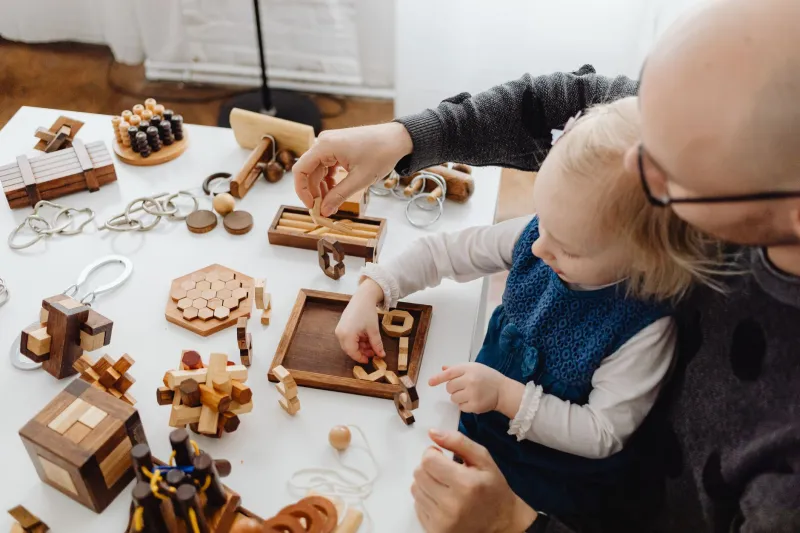
Walk into almost any American home with young kids these days, and you'll probably spot a tablet propped on the coffee table or a kid glued to a screen. It's become so normal that many parents barely notice it anymore. But a growing number of moms and dads are starting to push back — and they're finding inspiration in a pretty unexpected place: Poland.
Traditional Polish toys and games, many of them crafted from natural wood and designed to spark creativity, problem-solving, and hands-on learning, are quietly making their way into American nurseries, playrooms, and family game nights. And once families get a taste of what these heritage playthings have to offer, a lot of them don't look back.
The Screen Fatigue Factor
Let's be honest — most parents aren't anti-technology. They use it themselves, and they know their kids will need digital skills to thrive. But there's a real difference between intentional tech use and defaulting to a screen every time a child says they're bored.
Studies from organizations like the American Academy of Pediatrics have repeatedly flagged concerns about excessive passive screen time in young children, linking it to disrupted sleep, reduced attention spans, and fewer opportunities for imaginative play. Parents are listening. Many are actively searching for alternatives that feel enriching rather than just distracting.
That's where traditional European toys — and Polish ones in particular — are stepping into the spotlight. These aren't cheap plastic novelties. They're thoughtfully designed objects with real staying power, built to engage a child's mind rather than just occupy their hands.
What Makes Polish Toys Different
Poland has a rich craft tradition going back centuries, and that heritage shows up in the country's toy-making culture. Many Polish toy manufacturers still prioritize natural materials like solid wood, non-toxic paints, and durable construction that can survive the enthusiasm of a five-year-old without falling apart in a week.
But it's not just about materials. The design philosophy behind many classic Polish toys is fundamentally different from what dominates the shelves at big-box American retailers. Instead of doing the thinking for the child, these toys invite kids to do the thinking themselves.
Take wooden block puzzles, for instance. A well-made Polish puzzle doesn't flash lights or play music when you get a piece right. It just sits there, patiently, waiting for the child to figure it out. That process — the trial, the frustration, the eventual click of a piece fitting perfectly — builds real cognitive muscle in a way that a congratulatory jingle never could.
Strategy board games from Poland follow a similar logic. Many are rooted in mathematical thinking, spatial reasoning, and planning ahead. Kids have to pay attention, adapt their approach, and sometimes lose gracefully. These are life skills wrapped up in cardboard and wooden tokens.
STEM Learning Without the Buzzwords
Here's something that might surprise you: a lot of traditional Polish educational toys were doing STEM learning before STEM became a marketing term. Building sets that teach engineering principles, logic puzzles that strengthen mathematical thinking, and construction games that introduce basic physics — these concepts have been baked into European toy design for generations.
American parents who are eager to give their kids an academic edge are discovering that the flashiest STEM toy isn't always the most effective one. A simple wooden gear set or a well-designed pattern puzzle can teach cause-and-effect reasoning just as powerfully as an app, often more so, because the child is physically manipulating the outcome with their own hands.
There's also something to be said for the lack of a right-or-wrong feedback loop. When a child is building something with open-ended construction toys, there's no buzzer telling them they failed. They just keep experimenting. That persistence and creative flexibility is exactly what educators and child development experts say kids need most.
The Family Connection Piece
One thing American parents consistently mention when they talk about traditional toys is how much easier it is to play with their kids, not just near them. Sitting down with a strategy board game or working through a challenging wooden puzzle together creates a completely different dynamic than handing a child a tablet.
Board game nights have seen a massive resurgence in American households over the past few years, and Polish strategy games fit right into that trend. Many of them are designed for mixed age groups, meaning a seven-year-old and their parent can genuinely compete on a fairly level playing field. That's a rare thing, and families notice it.
There's also a cultural curiosity element at play. For families with Polish heritage, these toys are a tangible connection to roots and tradition. For those with no Polish background whatsoever, they represent something refreshingly different — a chance to step outside the usual toy aisle and discover something with a story behind it.
What Parents Are Actually Buying
At Zabawka Shop, we see the trends up close, and a few categories keep rising to the top of wishlists and shopping carts.
Wooden puzzles with intricate designs — especially those featuring animals, maps, or nature scenes — are consistently popular with parents of toddlers and early elementary-aged kids. They're visually beautiful enough to display, but sturdy enough to use daily.
Strategy board games aimed at ages six and up are another strong favorite, particularly those that can accommodate the whole family without requiring a PhD to learn the rules. Simple to start, satisfying to master — that's the sweet spot.
Building and construction sets made from natural wood or high-quality materials round out the top picks. These are the kinds of toys that get pulled out again and again over years, not just during the week after a birthday.
A Different Kind of Toy Story
The rise of traditional Polish toys in American homes isn't really about nostalgia, though that's part of it. It's about parents making an active choice — deciding that play should mean something, that a toy should earn its shelf space, and that childhood is too short to spend it passively staring at a screen.
Poland's toy-making tradition offers something genuinely valuable to modern American families: craftsmanship, intentionality, and a deep respect for what children are actually capable of when you give them the right tools and step back.
At Zabawka Shop, that's exactly the kind of play we're here to support. Whether you're shopping for your own kids or looking for a gift that'll actually get used, exploring what traditional Polish toys have to offer might just change the way your family plays — for good.